Origins and a History Shaped by the Sea
Despite common belief, Le Tréport does not mean “Three Ports”. Of Gallo-Roman origin, the name comes from the Celtic “traez” (a shoreline revealed when the sea retreats) and the Latin “portus”. The Romans called the site Ultéror Portus, meaning “outer maritime port,” to distinguish it from Auga, the river port (now the town of Eu).
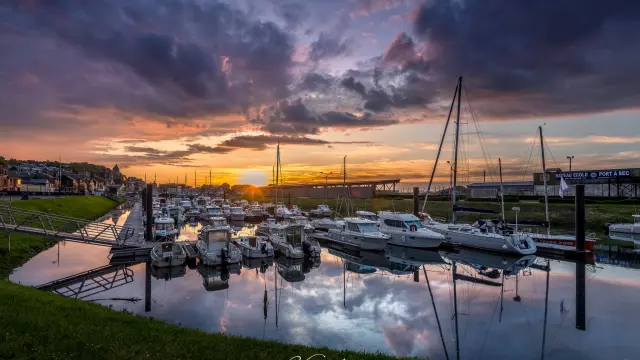
From the early Middle Ages to the late 19th century, the port endured raids by the Normans and later by the English. Le Tréport also faced a long struggle against the sea itself. Tides regularly silted up the harbour, pebbles blocked access, and storms weakened port facilities.
In response, major public works were undertaken at various times. In the 18th century, the Duke of Penthièvre, Count of Eu, ordered the construction of a flushing lock. Later, King Louis-Philippe deepened and widened the channel. At the end of the 19th century, Alexandre Papin, then mayor of Le Tréport, extended the western breakwater, dredged the basin, and oversaw the construction of the lighthouse and jetties.
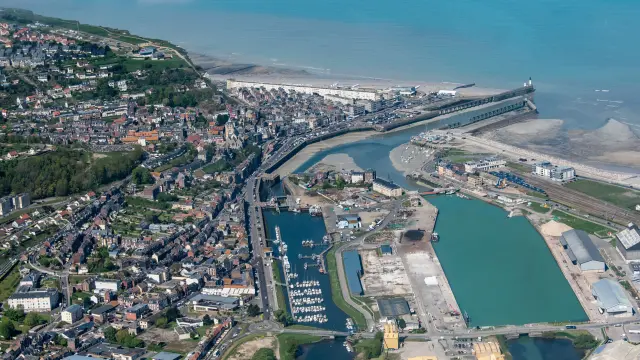 Le Tréport, vue aérienne du port